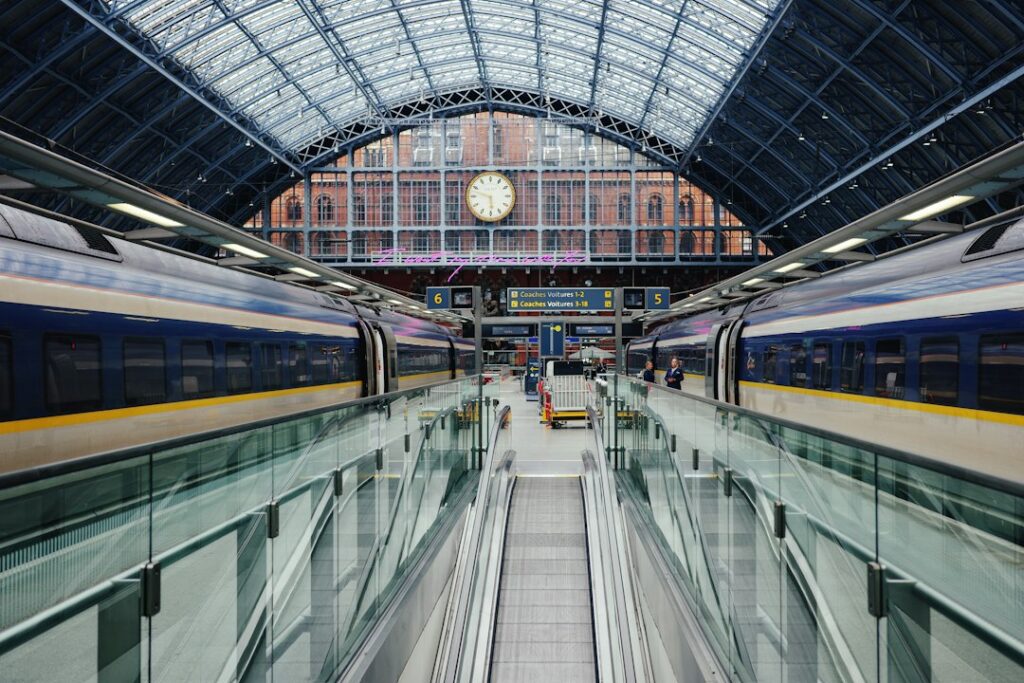
The train is late. Then the announcement arrives: “This service will no longer call at…” The station you expected to use has disappeared from the stopping pattern.
Why would a railway deliberately make a train miss stops?
Quick answer
During disruption, controllers may change a train’s stopping pattern to help the network recover. Skipping selected stops can reduce delay and free capacity for other trains, though it can make the journey much less convenient for passengers expecting those stations.
Skipping stops is a disruption-management decision
Network Rail explicitly says it sometimes adjusts stops, including missing out stops, as part of its plans for getting trains back on schedule after disruption.
That does not mean every late train will skip stations. Controllers weigh the consequences of changing the service against the impact on the wider network and passengers.
How can skipping a station help?
Dwell
No need for that station’s boarding and alighting time
Path
A delayed service may clear a busy section sooner
Recovery
The train and crew may reach their next duty closer to time
Even a small reduction in delay can be useful at a crowded junction or platform where one late train is holding up others.
It isn’t just about making one train look on time
Rail traffic shares track, junctions and platforms. A late train can delay following services and future journeys worked by the same train or crew.
Network Rail describes this as knock-on delay. It says operators may change stopping patterns, cancel, divert or shorten services to reduce the wider disruption.
Our explainer on why one late train delays others shows how that chain develops.
Are skipped stops always caused by lateness?
No. An emergency, infrastructure problem, platform restriction or diversion can also change which stations can be served. The passenger-facing result may look similar, but the underlying reason is not always an attempt to save time.
What happens if your station is skipped?
The best next step depends on whether you have already boarded.
| Situation | Practical next action |
|---|---|
| Before boarding | Check the latest calling pattern and choose a train that still serves your destination |
| Already on the train | Follow announcements and ask staff for the safest permitted way to reach your station |
| Need a connection | Check whether your planned interchange is still possible and what alternative is permitted |
Do not assume the train will make an unscheduled stop just because several passengers need it. Drivers follow the authorised route and operating instructions.
Could you be asked to change trains?
Yes. Staff may advise you to alight at a station the service still calls at and continue on another suitable service. The exact arrangement will depend on the disruption and your ticket.
Check before boarding an alternative operator’s train. Where special ticket acceptance has been agreed, the railway normally publishes that information during major disruption.
What if the altered stops make you late?
If your journey ends later than originally scheduled, the relevant operator’s compensation scheme may apply, subject to its delay threshold and conditions.
Keep the original itinerary and your eventual arrival time. It is the impact on the journey, not merely the fact that a station was skipped, that usually matters for Delay Repay.
If lateness keeps hitting your own station, our station performance page shows how reliably recorded train services called at each GB station in the latest complete 30-day window.
What if you cannot make the trip at all?
If the altered service means you decide not to travel because of qualifying disruption, the National Rail Conditions of Travel may provide a no-fee refund through your retailer. That is a separate process from Delay Repay for a completed but delayed journey.
What should you do in the moment?
A practical checklist
- Read or listen to the revised calling points, not just the destination shown on the train.
- Check the live departure or journey information for your station.
- Ask staff where to change if your stop has been removed.
- Confirm validity before using a different route or operator.
- Keep your ticket and arrival details for any later claim.
Why does this feel so unfair?
Because what improves the operation of the wider network can make an individual journey worse. A train may recover time while passengers for an omitted stop have to change, wait or travel back.
Network Rail acknowledges these trade-offs, describing stop changes as one of several contingency actions designed to reduce widespread disruption. It is a trade-off, not a sign that the passengers at the skipped station have somehow become less important.
The key thing to remember
Skipping stops is one of the tools railway controllers may use when normal timetables are no longer working. If your station is removed, do not simply stay on board and hope for the best: check the revised route, get advice on the permitted connection, and keep your journey details if you arrive late.
Sources
- Network Rail: Knock-on delays
- Network Rail: How we keep you updated when there’s a delay
- National Rail: Changing Trains
- National Rail: Compensation and Refunds
Altered stopping patterns, ticket acceptance and compensation options depend on the specific incident. Check current operator guidance before travelling.
Keep reading
- Train delay compensation and refunds: the complete guideDelay Repay thresholds, Condition 30 refunds and every claim route: how to get money…
- Delay Repay vs a ticket refund: what is the difference?Delay Repay or train ticket refund? The difference depends on whether you travelled and…
- What actually happens when you miss a connection?Missed your train connection in Britain? Understand the difference between a delayed first train,…
Part of the guide: Train delay compensation and refunds
Was this guide useful?
Tell us honestly. It helps us decide which guides to improve next.
Thank you, that has been recorded.
Be first on board
The Live Trains UK app is on the way. Join the launch list and be first to track a live train from your phone. One email the day it ships, then your address is deleted.
You are on the list. One email at launch, then your address is deleted.