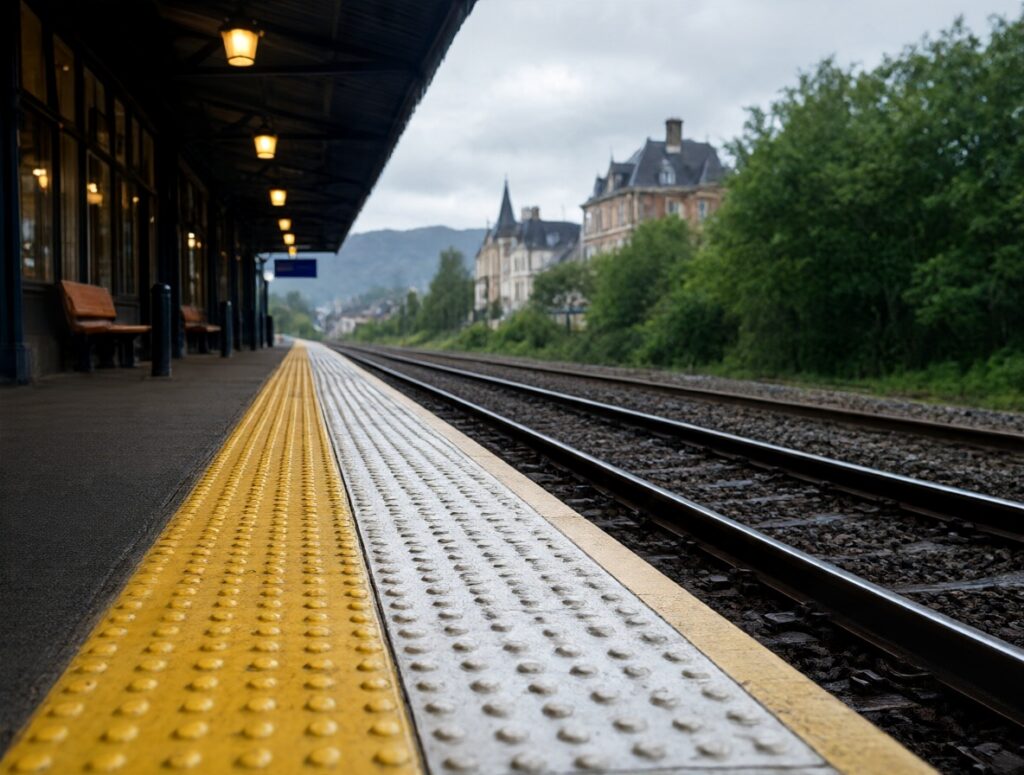
The board has shown Platform 4 since you arrived. Then, three minutes before departure, it quietly changes to Platform 7 and half the concourse starts running.
Platform information behaves differently from time information, and the difference is worth understanding before you plan your walk to the far end of the station.
Quick answer
A platform number can be scheduled, estimated or confirmed, just like a time. It is confirmed only once the railway has actually allocated and observed that platform. Estimates can and do change close to departure, because they depend on what other trains are doing, not just on your train.
Where a platform number comes from
Long before the day of travel, the timetable suggests which platform each service should use. But a suggestion is not an allocation. On the day, signallers and station systems decide which platform each train actually gets based on what is happening on the ground.
That is why the same service can leave from different platforms on different days without anyone having made a mistake. The platform in the timetable is the plan; the platform on the board is the allocation that is actually in force.
Confirmed versus estimated platforms
Departure systems mark platform information with different levels of certainty:
| What the board shows | What it means |
|---|---|
| Scheduled platform | The platform in the long-term timetable plan. Nothing has been allocated for today yet. |
| Estimated platform | The system expects this platform based on current plans, but it is not locked in. It can change. |
| Confirmed platform | The platform has been allocated and the train is expected to use it. This is the strongest indication a data feed can give before the train arrives. |
Many boards do not spell out which of the three you are looking at. If the platform appeared only in the last few minutes and has stayed steady, it is more likely to be confirmed; if it has been on the board since yesterday, treat it as the scheduled plan.
Why platforms change close to departure
Late platform changes are rarely random. Common causes include:
- An inbound train running late. Platforms are sequenced. If the train standing at your platform should have left ten minutes ago, your service may be re-allocated elsewhere so the station keeps flowing.
- Crowding and dwell time. Dwell time is simply how long a train stands at the platform. A crowded platform can push a departure to a different, quieter one.
- Carriage, crew or vehicle changes. If the train itself is swapped, the new one may arrive at a different platform.
- Disruption elsewhere. Diverted trains and re-planned moves take priority over the plan.
Network Rail explains how station and network information is produced and pushed out during disruption in how we keep you updated when there’s a delay. The closer to departure, the more the picture reflects live allocation rather than the plan.
When the app and the station display disagree
Live data travels to different displays at different speeds. A station platform screen is often fed directly by local systems, while an app receives data through national feeds. Either one can briefly hold newer information than the other.
If they disagree, the practical reading is that the allocation is in flux, not that one source is simply wrong. Check the most recent timestamp you can see, then check again a minute later. If the difference persists, ask staff, who can often see what signallers plan to do next.
The practical habit
A platform checklist
- Aim to arrive at the station with time to spare on unfamiliar routes.
- Glance at the platform early but confirm it again near departure.
- Listen for announcements, which often explain a change before the screens reflect it.
- Where lifts or long walks are involved, allow extra time for last-minute platform changes.
- If the display and app look different, re-check and then ask staff.
Passengers with heavy luggage, reduced mobility or tight connections should treat a last-minute platform change as a real possibility at any busy station, and plan routes accordingly. Our guide to step-free access covers how layouts differ.
Use Live Trains UK to check departures and platform updates alongside the station’s own displays.
Questions passengers ask
Why do platforms change at the last minute?
Most platforms are allocated shortly before departure, once the incoming train has a firm run into the station. Crew changes, crowding and disruption elsewhere on the route can still swap it, so the first platform shown is always provisional until close to departure.
Is my platform printed on the ticket?
No. A ticket reserves the journey, not the platform. Even with a seat reservation you will not know where the train leaves from until the station allocates it, which is why the departure screens remain the source to check.
Should I trust the app or the platform screen?
Both draw from national and local feeds that can update at different speeds. Treat whichever one you are reading as provisional, cross-check the other if the number surprises you, and ask staff when they disagree for more than a few minutes.
Sources
Platform allocations are made by the railway in real time and can change at short notice. Always confirm against station displays and announcements before boarding.
Keep reading
- Delay Repay vs a ticket refund: what is the difference?Delay Repay or train ticket refund? The difference depends on whether you travelled and…
- What actually happens when you miss a connection?Missed your train connection in Britain? Understand the difference between a delayed first train,…
- Refund if you decide not to travel after disruption?If disruption stops you travelling, Condition 30 gives a no-fee refund on unused tickets.…
Part of the guide: Train delay compensation and refunds
Was this guide useful?
Tell us honestly. It helps us decide which guides to improve next.
Thank you, that has been recorded.
Be first on board
The Live Trains UK app is on the way. Join the launch list and be first to track a live train from your phone. One email the day it ships, then your address is deleted.
You are on the list. One email at launch, then your address is deleted.